
Introduction
The Dambulla Cave Temple, also known as the Golden Temple of Dambulla, is one of the most significant cultural and religious landmarks in Sri Lanka. Located about 72 km from Sigiriya, this sacred site is renowned for its spectacular cave temples filled with ancient Buddhist murals and statues.
Recognized as a UNESCO World Heritage Site since 1991, the temple is a must-visit destination for pilgrims, history lovers, and art enthusiasts exploring Sri Lanka’s Cultural Triangle.
Early History of Dambulla Cave Temple
The Dambulla Cave Temple is built within a vast rock cave complex that has served as a place of refuge and meditation for Buddhist monks since at least the 1st century BCE. Archaeological evidence suggests that monks used these natural caves as hermitages long before the temple complex was formally developed.
King Valagamba and the Temple’s Expansion (1st Century BCE)
The temple gained prominence during the reign of
King Valagamba (89–77 BCE).
After being exiled during South Indian invasions, King Valagamba sought refuge in these caves. When he later regained his throne, he transformed the caves into a grand Buddhist temple as a gesture of gratitude. This marked the beginning of Dambulla’s development into one of the most important Buddhist sanctuaries in Sri Lanka.
Over time, successive kings and devotees expanded the temple complex, adding statues, paintings, and decorative shrines.
Later History and Renovations
Through centuries of royal patronage and religious devotion, the Dambulla caves were continuously renovated and expanded. Today, the temple complex consists of five main caves containing:
- Over 150 statues of the Buddha
- Numerous statues of Sri Lankan kings and Hindu deities
- Extensive murals covering approximately 2,100 square meters
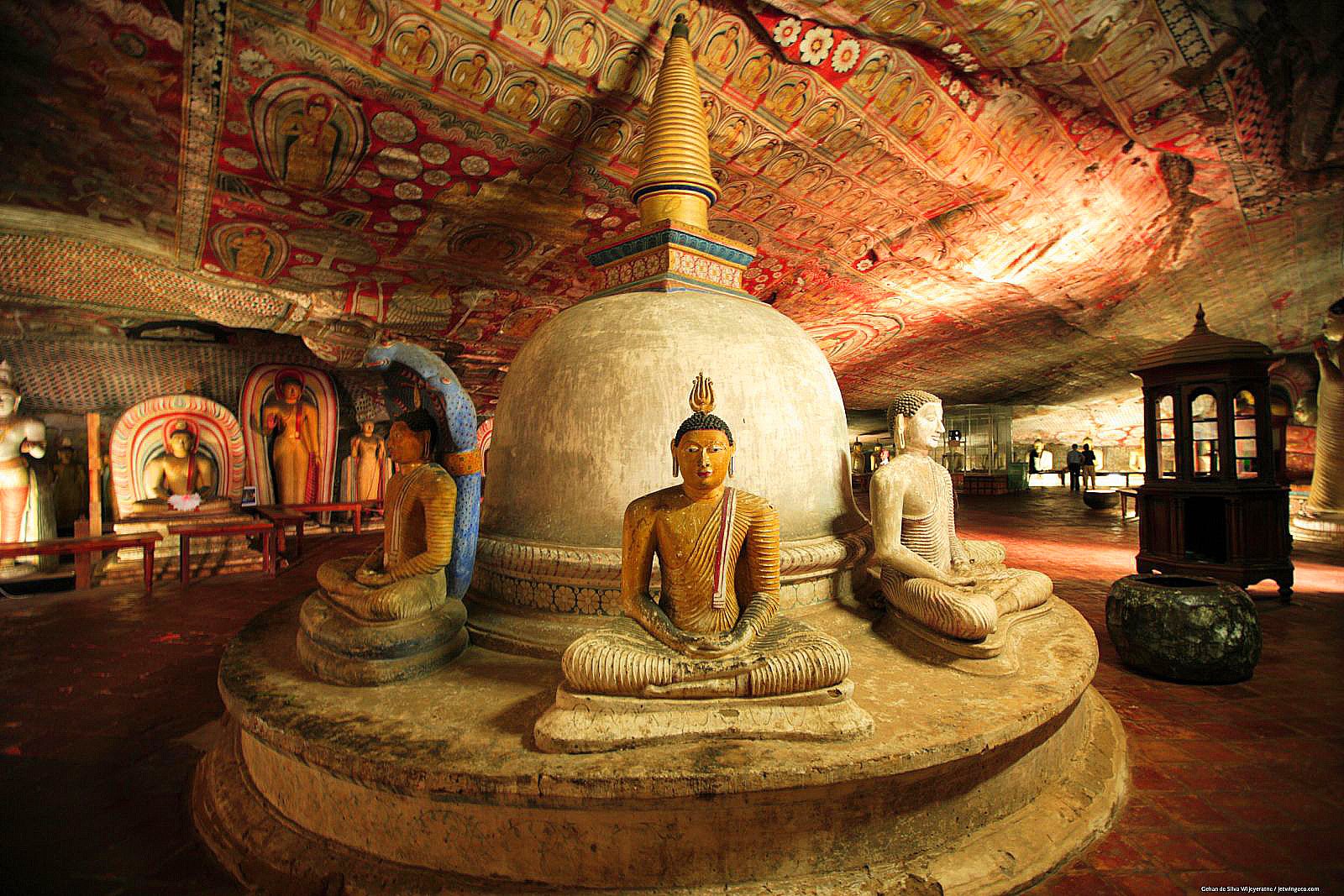
These paintings illustrate scenes from the life of the Buddha, Jataka tales, and significant historical events, making Dambulla one of the largest preserved collections of ancient Buddhist art in South Asia.
Cultural and Religious Significance
The Dambulla Cave Temple is the largest and best-preserved cave temple complex in Sri Lanka. It is not only a historical monument but also an active place of worship where monks and devotees continue to meditate and perform religious rituals.
Its spiritual, artistic, and historical importance led to its recognition as a UNESCO World Heritage Site, highlighting its global cultural value.
The Temple in Modern Times
Today, the Dambulla Cave Temple attracts both international tourists and local pilgrims. Visitors come to:
- Explore the ancient cave shrines
- Admire centuries-old Buddhist artwork
- Experience the peaceful spiritual atmosphere
- Enjoy panoramic views of the surrounding plains
The nearby town of Dambulla also offers local markets, handicrafts, and cultural experiences that enhance the visit.
Main Attractions at Dambulla Cave Temple
The Five Main Cave Shrines
Cave 1 – Devaraja Viharaya (Cave of the Divine King)
This cave houses a large reclining Buddha statue, one of the most iconic sculptures in the complex. The cave’s walls and ceiling are decorated with paintings depicting key moments from the Buddha’s life.
Cave 2 – Maharaja Viharaya (Cave of the Great Kings)
The largest and most impressive cave, Cave 2 contains around 50 Buddha statues along with statues of Sri Lankan kings, including King Valagamba. The ceiling is covered with detailed murals portraying religious and historical scenes.
Cave 3 – Maha Alut Viharaya
This cave features a mixture of Buddha statues, statues of kings, and religious figures, showcasing artistic styles from later historical periods.
Cave 4 – Pachima Viharaya
Cave 4 contains 16 statues, including images of Hindu deities, reflecting the historical cultural interactions between Buddhism and Hinduism in Sri Lanka.
Cave 5 – Devana Alut Viharaya
The newest cave, Cave 5, includes about 80 Buddha statues and a 14-meter-long reclining Buddha, making it one of the most visually striking chambers in the temple complex.
Ancient Murals and Artwork
The ceilings and walls of the caves are covered with vibrant frescoes that have survived for over 2,000 years. These paintings depict:
- The life of Gautama Buddha
- Jataka stories of the Buddha’s past lives
- Royal ceremonies and historic events
The detailed artistry and preserved colors make Dambulla one of the finest examples of ancient Buddhist mural painting in Asia.
The Golden Buddha Statue
At the base of the temple complex stands a magnificent golden Buddha statue, which serves as a symbolic entrance to the sacred site. This modern addition enhances the temple’s visual impact and has become one of Dambulla’s most photographed landmarks.
Scenic Viewpoint
Situated about 160 meters above the surrounding plains, the temple offers breathtaking panoramic views of forests, villages, and the town of Dambulla. The climb to the caves is both a spiritual and scenic experience.
Things to Do at Dambulla Cave Temple
Visitors to Dambulla can enjoy several memorable activities, including:
- Exploring all five cave temples and their statues
- Admiring ancient murals and sacred artwork
- Learning about Buddhist history through guided tours
- Taking photographs of the cave interiors and surrounding landscapes
Travel Tips for Visiting Dambulla Cave Temple
To ensure a respectful and comfortable visit, keep these tips in mind:
- Wear modest clothing covering shoulders and knees, as it is a sacred religious site
- Remove shoes and hats before entering the caves
- Visit early morning or late afternoon to avoid heat and crowds
- Consider hiring a local guide to better understand the temple’s historical and spiritual significance
Why Dambulla Cave Temple is a Must-Visit in Sri Lanka
The Dambulla Cave Temple is more than just a historical monument—it is a living spiritual sanctuary that preserves over two millennia of Buddhist devotion, royal patronage, and artistic excellence.
Its unique combination of:
- Ancient cave architecture
- Sacred religious heritage
- Remarkable mural art
makes it one of the most unforgettable cultural experiences in Sri Lanka.
Conclusion
The Dambulla Cave Temple stands as a timeless symbol of Sri Lanka’s religious devotion and artistic brilliance. From its centuries-old cave shrines to its vibrant murals and serene hilltop views, the temple offers visitors a powerful journey into the island’s spiritual and cultural history.
Whether you are a traveler seeking history, spirituality, or artistic inspiration, a visit to Dambulla is an essential part of exploring Sri Lanka’s rich heritage.